Health and Physical Education enables students to develop skills, understanding and willingness to positively influence the health and wellbeing of themselves and their communities. In an increasingly complex, sedentary and rapidly changing world, it is critical for every young Australian to flourish as a healthy, safe, active and informed citizen. It is essential that young people develop their ability to respond to new health issues and evolving physical activity options.
Integral to Health and Physical Education is the acquisition and application of movement skills, concepts and strategies across a range of physical activity contexts. This enables students to participate confidently and competently when moving. Movement is a powerful medium for learning through which students can acquire and practise personal, social and cognitive skills. When learning in movement contexts, students gain skills, understanding and dispositions that support lifelong physical activity participation and enhanced movement performance.
In Health and Physical Education, students develop personal and social skills through interacting with others in classroom and movement contexts. They use health and physical activity resources to enhance their own and others' wellbeing. Health and Physical Education addresses factors that influence the health, safety, relationships, wellbeing and physical activity patterns of individuals, groups and communities. Students develop the understanding to challenge discrimination, assumptions and stereotypes. They gain skills to take positive action regarding diversity, inclusion, consent and respect in different social contexts.
Aims
Health and Physical Education aims to enable students to:
- access, evaluate and synthesise information to make informed choices and act to enhance and advocate for their own and others' health, wellbeing, safety and physical activity participation
- develop and use personal, social and cognitive skills and strategies to promote self-identity and wellbeing, and to build and manage respectful relationships
- acquire, apply and evaluate movement skills, concepts and strategies to respond confidently, competently and creatively in various physical activity settings
- engage in and create opportunities for regular physical activity participation as individuals and for the communities to which they belong
- analyse how varied and changing personal and contextual factors shape opportunities for health and physical activity.
Structure:
Year 7 HPE: 1 x Semester of 3 lessons per week (Either Semester 1 or 2).
Units:
- TERM 1 or 4 - Life Saving / First Aid (term 1 or 4 depending on which semester your child has their HPE lessons)
- TERM 2 or 3 - Relationship Education + Interschool Sports
Year 8 HPE: 1 x Semester of 3 lessons per week (Either Semester 1 or 2).
Units:
- TERM 1 or 4 - Tactical Awareness + Basketball, Futsal, Volleyball or Soccer
- TERM 2 or 3 Fit and Healthy + Fitness programs
Year 8 HRE (Human Relationships Education): 2 lessons per week all year.
This subject is in addition to regular year 8 HPE classes and involves 1 theory lesson and 1 practical lesson each week. Respectful relationships education aims to teach students how to develop behaviours and attitudes that promote healthy, safe and respectful relationships.
All content covered in these lessons is taken from the QLD Governments RESPECT HUB which has support for Parents, Students, Families and Schools regarding the development of respectful relationships.
Year 9 HPE: 3 lessons per week all year.
Units:
- TERM 1 – Relationships Education + Net Sports
- TERM 2 – Be Fit and Active + Fitness Performed to Music
- TERM 3 – Alcohol and Drug Education + Interschool Sports
- TERM 4 – Mental Health/Positive Psychology + Challenge and Adventure activities.
Year 10 Semester 1: 1 Term of HPE, 3 x 70min lessons per week.
Unit:
Year 10 Semester 2:
In Year 10 Semester 2, students have the opportunity to trial subjects within the HPE faculty that they may like to select in Year 11 and 12.
SEMSTER 2 SUBJECT OFFERINGS
| Year 10 Semester 2 Subject | Year 11 / 12 Pathway |
| Preparatory Physical Education – PPE101A | Senior Physical Education |
| Preparatory Psychology – PPS101A | Senior Psychology |
| Preparatory Health – PHE101A | Senior Health |
| Preparatory Recreation – PRE101A | Senior Recreation |
| Preparatory Fitness | Certificate 3 in Fitness
|
SENIOR SCHOOL: YEAR 11 and 12
ATAR: General Subjects
Physical education
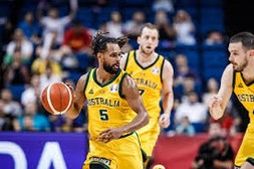
Within Physical Education students learn experientially through three stages of an inquiry approach to ascertain relationships between the scientific bases and the physical activity contexts. Students recognise and explain concepts and principles about and through movement and demonstrate and apply body and movement concepts to movement sequences and movement strategies. Through their purposeful and authentic experiences in physical activities, students gather, analyse and synthesise data to devise strategies to optimise engagement and performance. They evaluate and justify strategies about and in movement by drawing on informed, reflective decision-making.
 Physically educated learners develop the 21st century skills of critical thinking, creative thinking, communication, personal and social skills, collaboration and teamwork, and information and communication technologies skills through rich and diverse learning experiences about, through and in physical activity.
Physical Education fosters an appreciation of the values and knowledge within and across disciplines, and builds on students' capacities to be self-directed, work towards specific goals, develop positive behaviours and establish lifelong active engagement in a wide range of pathways beyond school.

Health Education
Senior Health Education continues developing skills essential for senior studies whilst enhancing students' understanding of the need to visualise the concept of health through the understanding of issues, critical thinking and the creation of opportunity for change.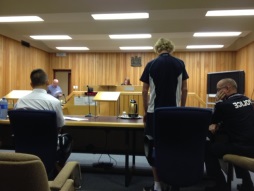
Topic categories include:
Students participating in Health Education have the opportunity to develop a wide range of skills for their QCS exam, and research skills in preparation for university.
PSYCHOLOGY
 Psychology provides opportunities for students to engage with concepts that explain behaviours and underlying cognitions. In Unit 1, students examine individual development in the form of the role of the brain, cognitive development, human consciousness and sleep. In Unit 2, students investigate the concept of intelligence, the process of diagnosis and how to classify psychological disorder and determine an effective treatment, and lastly, the contribution of emotion and motivation on the individual behaviour. In Unit 3, students examine individual thinking and how it is determined by the brain, including perception, memory, and learning. In Unit 4, students consider the influence of others by examining theories of social psychology, interpersonal processes, attitudes and cross-cultural psychology.
VET subjects
Certificate III in Fitness (SIS30321) and Certificate II in Sport and Recreation (SIS20115)
RTO: Binnacle Training TRO Code: 31319
This course focuses on students wishing to pursue a career in fitness or in an aligned area, and when completed, will result in 8 credits towards their QCE.
Benefits for students:
The Certificate III in Fitness and Certificate II in Sport and Recreation is referred to as the 'entry level requirement' for the fitness industry and results in a Gym Instructor qualification. This qualifies graduates to work in health and fitness centres as a gym floor supervisor and programmer.
What does the course cover?
- anatomy and physiology
- how to conduct a pre-exercise health screens
- how to design fitness programs
- how to build rapport with clients
- basic nutrition
- how to test fitness levels
- how to identify clients with special needs
- how to conduct recreational programs
Applied subjects
Excellence in Surfing
The primary aim of the Sunshine Beach High Excellence in Surfing Program is to equip students for success in life through the sport of surfing. The Excellence in  Surfing Program has been developed due to the popularity of surfing in our school region. The Junior Excellence in Surfing Program aims to introduce and develop surfing related concepts that students might otherwise not have the opportunity to experience.
These concepts include individual skills and competition tactics, sports psychology, surfing video analysis, editing and focuses on the students' physical performance.
More specifically, students participating in the Senior Excellence in Surfing Program will investigate coaching principals, fitness strategies through a Certificate II in Aquatic Practices with ASLS. The Excellence in Surfing Program is more than a series of physical training sessions. Students involved in the Excellence in Surfing Program are required to attend sports related theory sessions and develop an extensive knowledge, including fitness development, organizational skills, judging, marketing and managerial aspects of the sport.
The overall objective of the Excellence in Surfing Program is not simply to develop 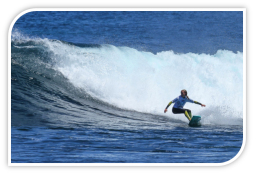 good surfers, but also the education of students about personal development and strategies of hard work and determination for success.
More details can be found on the Excellence in Surfing page of the website.
Senior Recreation
Recreational students study a wide range of activities in recreational and outdoor pursuits. Being a QCAA registered subject, it provides four points for the Senior Certificate.
In addition to participating in a range of sports, students will complete an introductory coaching and officiating course. Our Recreation students are then able to coach the primary students from Sunshine Beach State School in a series of lessons.  Also, they are able to take on a leadership roles in the running of our school carnivals.
Recreation students have an enjoyable course, learn lifelong skills and develop strong community relationships and partnerships.
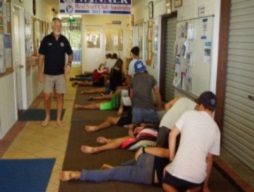 The aim of recreation is to develop skills in a wide variety of sports and fitness activities including Surf Lifesaving, rowing, beach sports, boxing, lawn bowls, Tennis and CrossFit and promote healthy choices that will set students up for a lifetime of physical activity.
Contact Details
Head of Physical Education - Ben Oliver
Sport Co-ordinator – Matt
Sekfy
Surfing Excellence Coordinator - Kurt Barrow